Is Your Severance Offer Fair?
Key questions to ask before signing
When you receive a severance offer, the first instinct is usually to look at the number. This can be especially true if you have been under prolonged stress and anticipating job loss, as the uncertainty and emotional strain can significantly impact your ability to process information and make decisions clearly.
While the question “how much am I getting?” is understandable, it’s also incomplete. A severance offer is not simply a payment. It is a legal agreement. In exchange for compensation, you are typically being asked to release claims and permanently close the employment relationship.
Before signing, the more important question is whether the offer is fair and complete.
Most employees focus on the headline amount. Fewer evaluate how that amount was calculated, what assumptions were used, and what rights they are being asked to surrender. Understanding those elements can materially affect the outcome and your ability to negotiate effectively.
How severance is calculated in Canada
In Canada, severance is influenced by common law principles. Courts assess several factors when determining reasonable notice or compensation. These factors include:
Length of service
Age
Position level and responsibilities
Availability of comparable employment
These are referred to as Bardal factors. They are not arbitrary. They shape how entitlement is assessed beyond minimum statutory standards.
Many severance offers exceed minimum employment standards, but that does not automatically mean they reflect full common law entitlement.
Before accepting an offer, it is important to understand:
Whether your full compensation was included, such as bonuses or commissions
Whether benefits continuation was properly addressed
Whether the calculation reflects your seniority and tenure
If you don’t understand how your number was determined, you can’r assess whether it is reasonable.
Deadlines should be reviewed carefully
Severance letters often include deadlines for acceptance. These timelines can create urgency and pressure. However, deadlines are not always fixed. Employers frequently agree to extensions, particularly if you are reviewing the agreement professionally.
Rushing to sign because of a short timeline can lead to irreversible, emotional decisions.
Before signing, confirm:
The official end date of employment
The duration of the severance period
When benefits will cease
How unused vacation or unpaid bonuses will be handled
These details influence the true value of the package and can affect eligibility for Employment Insurance once payments end.
Understanding the release clause
Most severance agreements include a release clause. This clause typically requires you to waive your right to bring future claims against the employer.
These claims can include:
Wrongful dismissal
Human rights complaints
Unpaid compensation disputes
Other employment related legal actions
Once signed, a release is difficult to challenge. It’s essential to evaluate whether the compensation offered reflects the rights you are giving up. The exchange must be proportionate.
Signing without understanding the scope of the release can permanently eliminate options.
The difference between a low offer and an incomplete offer
Not all severance issues relate to the dollar amount. In some cases, the offer may omit key components. For example:
Variable compensation may not be included
Stock or equity entitlements may not be addressed
Benefit continuation may be unclear
The Record of Employment separation code may not be discussed
An incomplete offer can be just as problematic as a low one. Identifying gaps requires asking the right questions before signing.
Structure improves negotiation outcomes
Severance negotiations often occur during emotionally charged moments. You may feel uncertain, disappointed, or under pressure to move forward quickly.
The organization, by contrast, has typically prepared the agreement carefully and in advance.
Using a structured framework to assess your offer ensures that important issues are not overlooked. It also changes the negotiation dynamic. When you ask informed questions, the conversation becomes strategic rather than reactive.
This is why professionals rely on defined checklists rather than relying on memory or instinct.
Five questions that reveal the strength of your offer
There are five specific questions that can materially affect how you evaluate a severance offer. Most individuals ask one or two. Few systematically ask all five.
These questions address how the offer was calculated, how timing affects payments, who has authority to negotiate, how employment records will be coded, and what rights are being released in exchange for payment.
When these questions are raised, it often becomes clear whether the offer reflects a comprehensive assessment or a starting point for negotiation.
Rather than outlining each question in detail here, I have structured them in a concise guide designed to help you review your package methodically before signing.
Before signing anything, review your offer through a structured lens and make sure to construct any reply effectively.
The five questions that matter most are outlined in a short, practical guide designed to help you spot gaps, understand leverage, and avoid signing under pressure.
Enter your email below to receive it.
Final considerations before signing
Before you agree to any severance package, pause and reflect on the following:
Do you understand how the offer was calculated?
Do you understand your legal eligibility?
Do you know what rights you are releasing?
Have you confirmed how key dates and payments are structured?
Are you clear on who has authority to negotiate changes?
Have you evaluated whether the compensation reflects your tenure and role?
Severance decisions are rarely improved by speed. They are improved by clarity. Taking time to assess your offer carefully can prevent long term consequences. If you want a structured framework to guide that assessment, download the five question guide before signing anything.
Clarity should always precede your commitment.
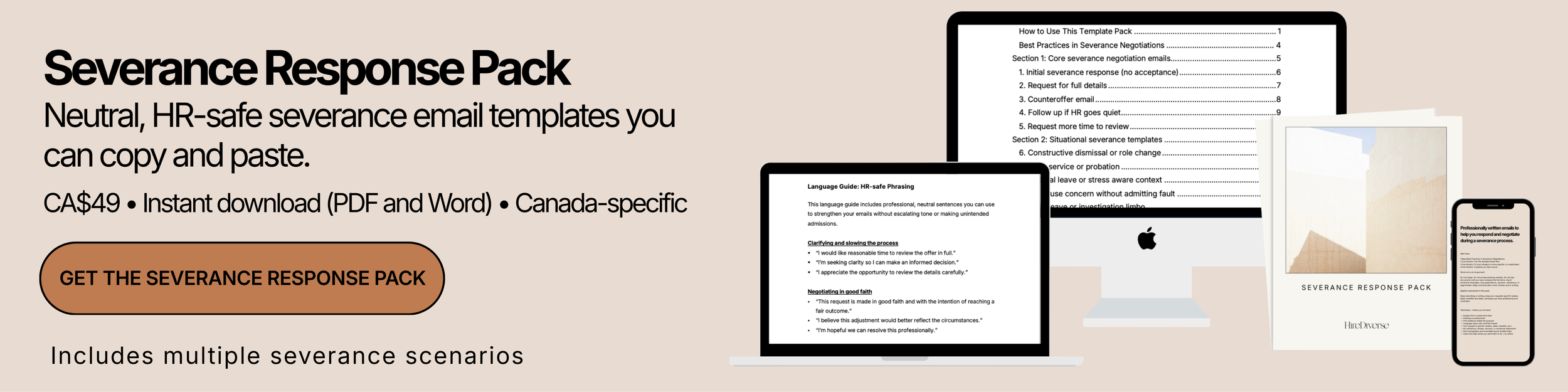
Severance Response Pack
Structured severance response and negotiation email drafts, written in a neutral, HR-safe tone.
CA$49 • Instant download • Canada-specific

Frequently asked questions about constructive dismissal
Can I claim constructive dismissal if my salary did not change?
Possibly. Courts assess loss of status, authority, and responsibility. A serious demotion without pay reduction can still qualify as constructive dismissal if it fundamentally alters your role.
How long do I have to respond to a job change?
There is no fixed deadline in days, but responding quickly is critical. Waiting too long may be interpreted as acceptance of the new terms. Make sure responses are crafted carefully to protect your rights.
Should I resign if I believe I was constructively dismissed?
Resigning without documenting the breach or seeking advice can weaken your case. Strategic communication before resignation is often essential.
Does restructuring automatically protect the employer?
No. Calling something restructuring does not override employment law. The substance of the change is what matters.
Do I need a lawyer before sending an email?
Not always, but early legal advice can materially affect your leverage. Even one poorly worded message can influence negotiations.