How to Respond to Constructive Dismissal
What to do if your job duties change without your consent
A demotion rarely arrives with the words demotion or termination attached.
Instead, it is framed as restructuring. A business decision. A temporary reassignment. You are told the company is moving in a different direction and that your role will change, effective immediately.
One week you are leading a team. The next week you report to someone you used to manage. Your authority narrows. Your responsibilities shrink. You are told to start the new position tomorrow.
If you did not agree to that change, Canadian employment law may treat the situation as constructive dismissal.
Many professionals misunderstand this moment. They assume that unless they are explicitly fired, they have no recourse. That is not how the law works.
What constructive dismissal means in Canada
Constructive dismissal occurs when an employer makes a fundamental change to the terms of employment without the employee’s consent. The change must be significant. Normal evolution of duties, small reporting adjustments, or minor operational shifts usually do not qualify.
Courts assess whether a reasonable person in the same position would consider the new role substantially different from what was originally agreed to. The focus is on substance rather than labels.
Changes that may qualify include a demotion from a managerial position, removal of supervisory authority, significant reduction in pay or bonus structure, major alteration of reporting lines, relocation without agreement, or unilateral changes to core job duties.
Even when salary remains unchanged, a serious loss of status, responsibility, or leadership authority can still be material. The legal analysis looks at whether the contract has been fundamentally altered, not whether the employer describes it as restructuring.
A common constructive dismissal scenario
Consider a ten year employee who holds a management position. They attend leadership meetings and supervise a team. Without warning, they are told they are being relieved of managerial duties.
Their direct reports are reassigned. They are required to report to someone they previously supervised. The change is effective immediately.
The employer calls it a realignment. There is no documented performance issue. No written warning. No performance improvement plan.
The employee asks for clarity about compensation, reporting lines, and expectations. They are told the structure is already finalized.
This is where risk begins.
If the employee resigns immediately in frustration, they may undermine their leverage. If they continue working for months without objection, they may appear to accept the change. The window to respond strategically can be narrow.
Signs your job duties were fundamentally changed
Not every job adjustment is constructive dismissal. The following factors increase the likelihood that a change crosses the legal threshold.
You no longer supervise the team you were hired to lead
Decision making authority has been removed
Your title has been reduced in a way that affects your professional standing
You report to someone you previously managed.
Your compensation structure, including bonuses or incentives, has been materially altered
The change was imposed without consultation or meaningful opportunity to agree
Speed can be strategic. When changes are implemented immediately and the organization chart is updated before discussion, employees often feel pressured to comply. Pressure is not consent.
What to do if your role changes overnight
Your first instinct may be to resign. That can be costly.
Instead, pause. Ask for the new role description and compensation details in writing. Clarify reporting lines and performance expectations. Document that you do not agree to any fundamental changes. Avoid signing revised employment documents without review. Seek legal advice quickly.
Constructive dismissal claims are time sensitive. If you continue working under the new terms for too long without objection, a court may interpret that as acceptance.
The law does not provide a fixed number of days, but delay weakens leverage.
Slowing the process protects your position.
If you are unsure whether the change meets the threshold, begin with The Guide to Severance Negotiation in Canada and evaluate your situation objectively.
Limitation periods and timing risks
Timing is one of the most misunderstood aspects of constructive dismissal.
If you believe your contract has been fundamentally breached, you cannot wait indefinitely. Continuing to work for an extended period without formally objecting may signal acceptance of the new terms. On the other hand, resigning too quickly without documenting the breach may also harm your case.
In most provinces, formal limitation periods for starting a legal claim are generally two years. However, the practical timeline for preserving leverage is much shorter. The sooner you clarify your non acceptance and seek advice, the stronger your position.
Delays create ambiguity. Ambiguity benefits the employer.
Common employer defenses in constructive dismissal cases
Employers often argue that the change was minor or within their managerial rights. They may claim that restructuring is a normal business practice. They may argue that compensation was not reduced. They may assert that the employee accepted the change by continuing to work.
Courts evaluate whether the change was truly fundamental and whether the employee’s response was timely and clear. Documentation matters. Emails matter. Meeting notes matter.
A well structured written objection can materially influence how a dispute unfolds.
How severance works after constructive dismissal
If a court determines that constructive dismissal occurred, the employee may be entitled to reasonable notice or severance under common law.
Severance in Canada is based on factors such as age, length of service, position level, and availability of similar employment. A long term employee in a senior or managerial role may be entitled to substantial compensation, especially in a limited job market.
Every case is fact specific. Small differences in documentation, timing, and communication can affect outcomes significantly.
Before sending a reactive email or resigning, understand that language can either protect or undermine your leverage. A rushed resignation may eliminate severance rights. A structured response that documents your position can preserve them.
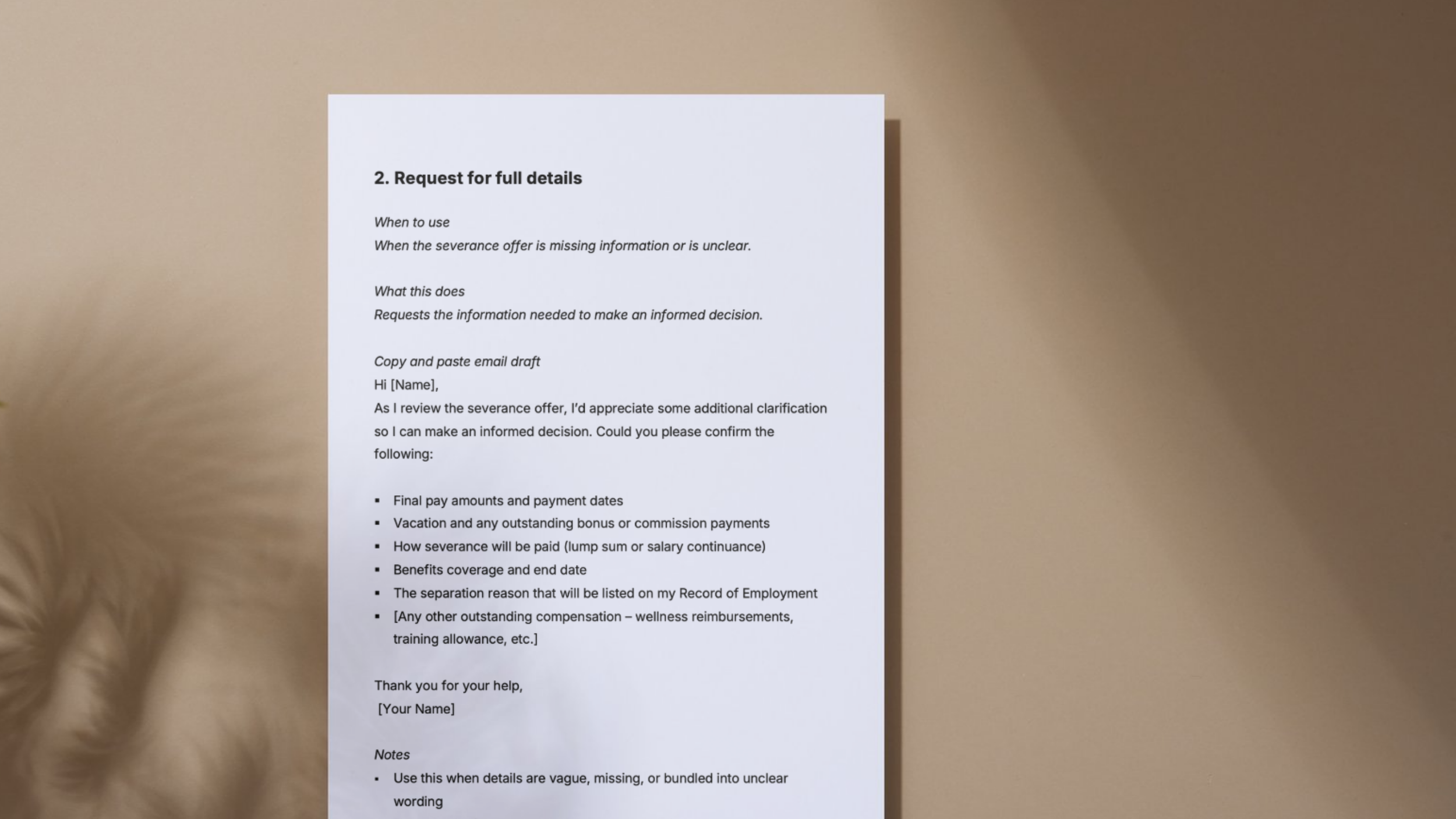
If you need support drafting that response, the Severance Response Pack with negotiation email templates includes constructive dismissal response language and a detailed checklist to help you avoid weakening your claim.
How to protect your position when your role changes
Constructive dismissal situations rarely feel dramatic in the moment. They feel confusing.
You are told the company is evolving. The structure is shifting. The business needs are different. You are expected to be flexible. Reasonable. Professional.
But underneath the language of restructuring is a simple question. Is this still the job you agreed to do?
When authority disappears overnight, when reporting lines are reversed, when leadership responsibility is removed without discussion, it is not just about ego. It is about contract. It is about consent. It is about whether the terms of your employment were fundamentally altered.
The most expensive mistake employees make in these moments is reacting emotionally or remaining silent. Resigning immediately can eliminate leverage. Continuing indefinitely without objection can signal acceptance. Both outcomes benefit the employer.
Constructive dismissal in Canada is ultimately about timing, documentation, and strategy. If your role changes without your agreement, slow the process down.
Ask for clarity in writing
Preserve your position before making any final decisions
You cannot control organizational decisions. You can control how you respond to them. And in many cases, that response determines whether you leave empty handed or negotiate from strength.
Frequently asked questions about constructive dismissal
Can I claim constructive dismissal if my salary did not change?
Possibly. Courts assess loss of status, authority, and responsibility. A serious demotion without pay reduction can still qualify if it fundamentally alters your role.
How long do I have to respond to a job change?
There is no fixed deadline in days, but responding quickly is critical. Waiting too long may be interpreted as acceptance of the new terms.
Should I resign if I believe I was constructively dismissed?
Resigning without documenting the breach or seeking advice can weaken your case. Strategic communication before resignation is often essential.
Does restructuring automatically protect the employer?
No. Calling something restructuring does not override employment law. The substance of the change is what matters.
Do I need a lawyer before sending an email?
Not always, but early legal advice can materially affect your leverage. Even one poorly worded message can influence negotiations.
Severance Response Pack
Structured severance response and negotiation email drafts, written in a neutral, HR-safe tone.
CA$49 • Instant download • Canada-specific