What To Review Before Signing a Severance Offer in Canada
Why you should never rush to sign a severance agreement in Canada
Getting a severance offer can feel urgent and overwhelming. You may be told you have 48 hours to sign. The letter may describe the package as fair or generous. You might feel pressure to move on quickly and avoid conflict.
But once you sign a severance agreement, you typically waive your right to pursue additional compensation. In Canada, that decision can affect months of income. Before you sign anything, there are critical factors you need to understand.
Severance offers are often starting points
Many employees assume the first number presented is final. In reality, employers frequently build negotiation room into initial offers.
Organizations calculate severance based on risk, cost control, and internal precedent. That does not always mean the offer reflects your full common law entitlement. In many cases, it reflects the minimum the employer hopes will resolve the situation quickly.
Negotiation is common in Canadian termination situations. A professional counterproposal is not unusual or inappropriate.
Minimum standards are not full entitlement
Provincial employment standards legislation sets minimum notice and severance requirements. These are legal floors, not ceilings.
Common law reasonable notice often exceeds statutory minimums. Courts consider factors such as:
Length of service
Age
Position and level of responsibility
Availability of comparable employment
If your offer closely mirrors only the minimum required by legislation, that is a signal to pause and assess whether you may be entitled to more.
Short deadlines are often strategic
It is common to receive a deadline of 48 hours or less. While employers can set timelines, these deadlines are frequently designed to encourage quick acceptance.
If you need time to review the agreement, you can request an extension. In many cases, employers grant additional time. Rushing to sign without understanding your entitlement benefits the employer, not you.
A short deadline does not automatically mean the offer disappears permanently.
Your compensation is more than base salary
Severance should reflect total compensation, not just base pay.
If you received bonuses, commissions, stock options, or other incentives, those amounts may form part of your common law notice entitlement. Excluding variable compensation can significantly reduce the value of your package.
Review whether the offer accounts for your full earnings history.
Understanding the release clause
Most severance agreements include a release clause. This clause typically requires you to waive your right to bring future claims against the employer.
These claims can include:
Wrongful dismissal
Human rights complaints
Unpaid compensation disputes
Other employment related legal actions
Once signed, a release is difficult to challenge. It’s essential to evaluate whether the compensation offered reflects the rights you are giving up. The exchange must be proportionate.
Signing without understanding the scope of the release can permanently eliminate options.
The difference between a low offer and an incomplete offer
Not all severance issues relate to the dollar amount. In some cases, the offer may omit key components. For example:
Variable compensation may not be included
Stock or equity entitlements may not be addressed
Benefit continuation may be unclear
The Record of Employment separation code may not be discussed
An incomplete offer can be just as problematic as a low one. Identifying gaps requires asking the right questions before signing.
Structure improves negotiation outcomes
Severance negotiations often occur during emotionally charged moments. You may feel uncertain, disappointed, or under pressure to move forward quickly.
The organization, by contrast, has typically prepared the agreement carefully and in advance.
Using a structured framework to assess your offer ensures that important issues are not overlooked. It also changes the negotiation dynamic. When you ask informed questions, the conversation becomes strategic rather than reactive.
This is why professionals rely on defined checklists rather than relying on memory or instinct.
Benefits continuation matters
Extended health benefits, disability coverage, and pension contributions can carry substantial financial value.
If benefits are cut off immediately or continued only for the statutory minimum period, that may not reflect a longer common law notice period. Losing benefits prematurely can expose you to unexpected risk during your transition.
Severance is not just a lump sum number. It is a total compensation package.
Employment contracts are not always enforceable
Many severance offers rely on termination clauses within employment contracts. However, Canadian courts have struck down numerous clauses that do not comply strictly with employment standards legislation.
If a termination clause is invalid, you may be entitled to common law reasonable notice instead of the limited amount set out in the contract.
Do not assume that because a clause exists, it is enforceable.
Signing a release has real consequences
Most severance agreements include a release. This document typically requires you to give up your right to pursue legal claims related to your employment or termination.
Once signed, you generally cannot reopen negotiations or seek additional compensation. That is why the review process is critical.
Signing quickly may feel like closure. It may also mean walking away from a larger entitlement.
Fear of negotiating is common but often misplaced
Employees frequently worry that negotiating will harm their reputation or future references. In practice, respectful negotiation is standard.
Employers expect some level of discussion. A calm and structured response that references objective factors such as tenure, age, or market conditions is rarely viewed as hostile.
The greater risk is accepting an undervalued offer without review.
What you should do before signing
Before you sign a severance agreement, consider:
How long you worked for the employer
Your age and career stage
The level and specialization of your role
Current hiring conditions in your industry
Whether your compensation included bonuses or commissions
Whether your termination clause has been reviewed for compliance
If you are unsure how these factors affect your entitlement, that uncertainty alone is a reason to pause.
Severance can represent months of income. Taking time to understand your position is not unreasonable. It is responsible.
Protecting your next chapter
Termination is disruptive enough without compounding the impact by signing away potential compensation. The period between jobs can shape your financial stability, stress level, and career trajectory.
Before you sign, make sure the offer reflects your real legal position. Make sure you understand what you are giving up. Make sure you are not making a permanent decision under temporary pressure.
The first offer is often just that. An offer. And once you sign, you cannot renegotiate.
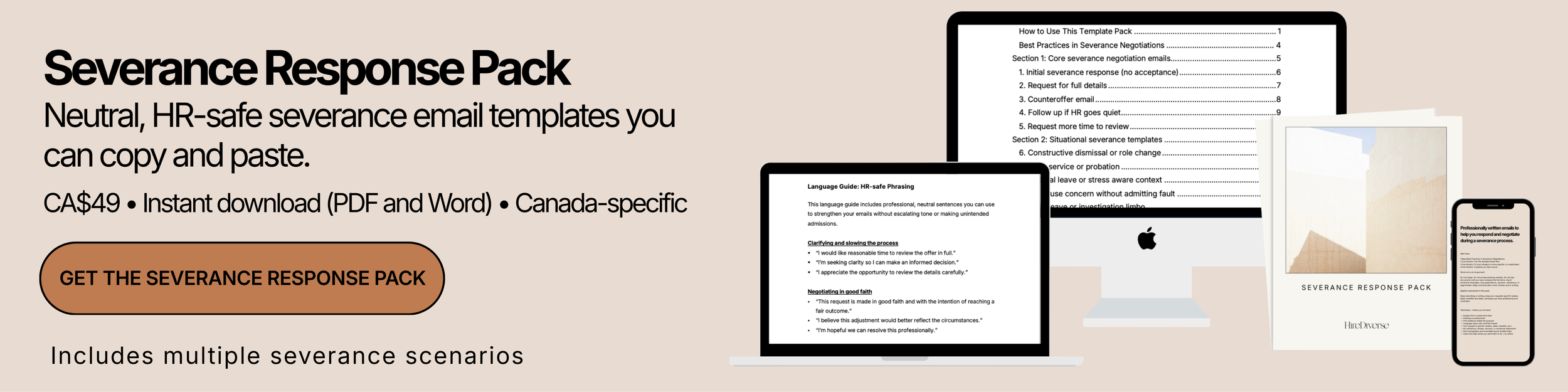
Severance Response Pack
Structured severance response and negotiation email drafts, written in a neutral, HR-safe tone.
CA$49 • Instant download • Canada-specific

Frequently asked questions about what to review before signing a severance offer
Can my employer force me to sign my severance offer within 48 hours?
Employers can set deadlines, but you can request additional time to review the agreement. Many employers grant extensions when asked professionally.
What happens if I sign and later regret it?
Once you sign a release, you typically waive your right to pursue additional compensation related to your termination. Reopening negotiations after signing is very difficult.
Is it normal to negotiate a severance offer in Canada?
Yes. Negotiation is common in termination situations. Employers often expect some level of discussion before finalizing the agreement.
Do I have to hire a lawyer to negotiate severance?
No. While legal advice can be helpful, many employees negotiate directly. What matters most is understanding the factors that influence common law reasonable notice.
What if the offer is already above minimum standards?
Even if an offer exceeds statutory minimums, it may still fall below common law entitlement. Reviewing the full context of your employment helps determine whether the amount is reasonable.