Why Your First Severance Offer Needs a Second Look
Getting a severance offer can feel overwhelming. You’re processing the shock of losing your job while being handed a document that looks official and urgent. Many employees assume the number presented is fixed and fair. In reality, first offers are often strategic starting points.
In Canada, severance is shaped by more than minimum standards. Employers must comply with provincial employment legislation, but courts have consistently awarded much higher amounts under common law. Understanding that gap is the first step toward protecting your financial future and negotiating from a position of strength.
Severance minimums are not the same as full entitlement
Every province sets minimum termination pay standards. For example, in Ontario, the Employment Standards Act sets out statutory notice and, in some cases, statutory severance pay through the Government of Ontario. Those are minimum floors, not ceilings.
Canadian courts routinely award significantly more than minimum standards under common law reasonable notice principles. The Supreme Court of Canada has confirmed in Bardal v Globe and Mail Ltd that factors such as age, length of service, character of employment, and availability of similar work determine reasonable notice. These awards can be months or even years of compensation, depending on circumstances.
Many employees are offered only statutory minimums or a modest enhancement. That doesn’t mean the offer reflects their full legal entitlement.
Employers often expect negotiation
Most employers build negotiation room into initial offers. This isn’t necessarily bad faith. It’s risk management.
Organizations weigh potential legal exposure, internal consistency, and cost. An initial offer may be designed to resolve matters quickly if accepted, but also leave room for adjustment if challenged. According to reporting by The Globe and Mail, employment lawyers consistently advise employees not to assume a first offer is final because negotiation is common practice in Canada.
If an employer truly believed the offer was non-negotiable, there would be little reason to include time-limited signing incentives or release language that contemplates settlement.
Understanding this dynamic changes the psychology of the situation. Negotiation is not aggression. It’s part of the process.
Pressure deadlines are often strategic
Many severance letters include a short deadline, sometimes as little as 48 hours. While employers can set deadlines, they cannot contract out of minimum employment standards, and courts often look unfavourably on conduct that pressures employees unfairly.
The Canadian Bar Association has emphasized that employees should take time to understand their rights before signing termination agreements. A rushed signature can permanently waive rights to additional compensation.
If you receive a short deadline, it doesn’t automatically mean the offer disappears after that date. In many cases, employers extend timelines upon request. The key is responding calmly and professionally.
Common reasons first offers are lower than they should be
There are recurring patterns in severance offers that create room for negotiation.
Statutory only packages
Some employers offer only minimum standards, even when common law entitlements would likely be higher.
Outdated termination clauses
Courts across Canada have struck down poorly drafted termination clauses. When that happens, common law reasonable notice applies instead.
The Government of Canada outlines that employment contracts must comply with applicable legislation, and non-compliant clauses can expose employers to higher liability.
Exclusion of bonuses or commissions
If you historically received variable compensation, you may be entitled to those amounts during the reasonable notice period.
Failure to account for age or job market realities
Older employees or those in specialized roles may require longer notice periods due to reduced re-employment prospects.
Each of these factors can significantly increase the value of a package.
Common law notice can be substantially higher
Common law notice is designed to compensate employees for the time it should reasonably take to find comparable employment. Courts consider multiple factors, including length of service and age.
For long-service employees, notice periods can exceed one month per year of service in some cases. Senior roles or specialized positions can result in even longer periods.
Statistics Canada labour market data regularly shows that re employment timelines vary widely depending on industry and economic conditions. In slower hiring cycles, reasonable notice periods may be longer to reflect real job market constraints.
When an initial offer doesn’t reflect these realities, negotiation becomes not just reasonable but prudent.
Negotiating does not mean burning bridges
Many employees worry that asking for more will damage their reputation. In practice, most employers expect a counterproposal.
A professional response might request additional compensation based on length of service, age, or role. It may also address continuation of benefits, bonus eligibility, or reference wording.
Negotiation framed respectfully and supported by objective factors is rarely viewed as hostile. In fact, it often leads to mutually acceptable adjustments.
The goal isn’t confrontation. It’s clarity.
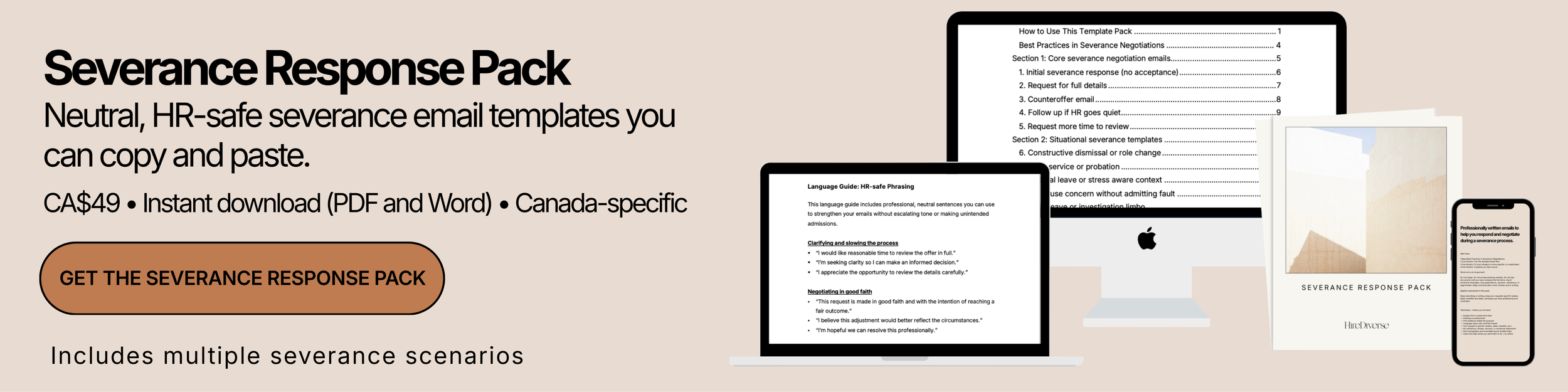
Severance Response Pack
Structured severance response and negotiation email drafts, written in a neutral, HR-safe tone.
CA$49 • Instant download • Canada-specific

Frequently asked questions about first severance offers in Canada
Is my employer allowed to offer only minimum severance?
Yes. Employers can legally offer only the minimum amounts required under provincial employment standards legislation. However, those minimums are not the same as your full common law entitlement. In many cases, courts award significantly more than statutory minimums. Just because an offer is legal at the minimum level doesn’t mean it reflects what you could reasonably negotiate.
How do I know if my severance offer is too low?
Several factors influence reasonable notice, including your age, length of service, position, and the availability of similar employment. If your offer appears to reflect only minimum standards or doesn’t account for bonuses, commissions, or benefits continuation, it may be lower than your potential entitlement. Comparing your situation to common law notice trends can help determine whether there’s room to negotiate.
What happens if I try to negotiate my severance?
In most cases, nothing negative happens. Employers often expect some level of negotiation and may have built flexibility into the initial offer. A respectful and professional counterproposal is standard practice in Canada. Negotiating does not automatically damage your reputation, especially when done calmly and strategically.
Can my employer withdraw the offer if I don’t sign right away?
Employers can set deadlines, but many will extend them if you request additional time to review the agreement. They cannot contract out of minimum employment standards. If you communicate professionally and within a reasonable timeframe, it’s common for discussions to continue rather than the offer disappearing immediately.
Should I sign my severance agreement without legal advice?
Signing a release usually means you waive your right to pursue additional claims related to your employment or termination. Because severance can represent months of compensation, reviewing the agreement carefully before signing is critical. Even if you choose not to retain a lawyer, you should understand your potential common law entitlement and the leverage points in your specific situation before accepting the first offer.